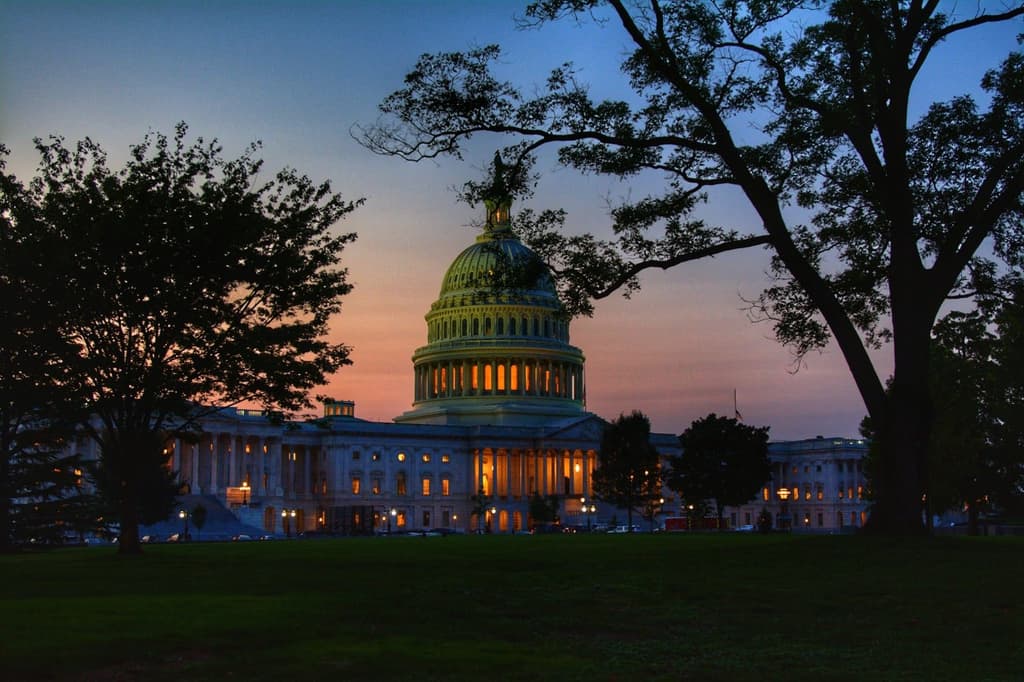
A House resolution led by Representative Don Bacon (R-NE) would designate October 15, 2026, as Liver Cancer Awareness Day. Helio Genomics provided input on the resolution and supports its call for prevention, risk identification, and early detection.
Helio Genomics has worked with the office of Representative Don Bacon (R-NE) on a House resolution focused on prevention, risk, and early detection
IRVINE, Calif., October 6th, 2026 — A new House resolution led by Representative Don Bacon (R-NE) would designate October 15, 2026, as Liver Cancer Awareness Day, elevating a disease expected to claim nearly 31,000 U.S. lives this year despite dramatically better outcomes when found early. Helio Genomics, which provided input on the resolution, announced its support for the measure and its call for greater national attention to prevention, risk identification, surveillance, and timely testing.
“Liver cancer is too often silent until the window for curative treatment has closed,” said Bharat Tewarie, MD, MBA, Chief Executive Officer of Helio Genomics. “This resolution can turn awareness into action—helping more people understand their risk, receive appropriate surveillance, and find cancer earlier. We are grateful to Representative Bacon and his office for leading this resolution, and proud to have worked with them to put early detection at the center of it. When it comes to liver cancer, every week matters.”
Why it matters: The need is plain. The American Cancer Society estimates about 42,340 new cases of liver and intrahepatic bile duct cancer in the United States in 2026, and about 30,980 deaths. Incidence has roughly tripled over four decades. Men account for about two-thirds of new cases,1 and the disease falls disproportionately on Hispanic, American Indian, Alaska Native, Asian American, and Black communities.2 Five-year relative survival is about 37 percent when the cancer is found while still localized, 13 percent once it has spread regionally, and 3 percent when it is distant. Across all stages, five-year survival is about 22 percent. For people with small, early tumors who can undergo resection or transplant, it is commonly 60 to 70 percent.3
The gap: Those better outcomes depend on a test that most high-risk patients do not always get. People with cirrhosis should be surveyed for hepatocellular carcinoma, yet a nationwide study of more than 80,000 patients found that only about 9 percent completed recommended ultrasound surveillance.4
Missed screenings can mean missed opportunities to detect cancer when it may still be curable. The congressional resolution would support the October 15 designation, recognize patients and families as well as advocates, researchers, providers, and early-testing innovators, and encourage programs focused on prevention, risk factors, and early detection.
“Public awareness campaigns increase screening rates in breast, colorectal, and cervical cancer. Liver cancer should not be the exception,” Tewarie said. “October 15 should be the day a clinician tells an at-risk patient the surveillance is overdue, and the day a family asks the question that is too often asked too late.”
“Liver cancer is taking too many lives because too many people do not know they are at risk until it is too late,” said Representative Don Bacon (R-NE). “Designating October 15 as Liver Cancer Awareness Day is a practical step toward helping patients and clinicians act sooner, when detection can lead to more treatment options. I am proud to lead this resolution and grateful to the patients, families, advocates, and companies working to make earlier detection a reality.”
Representative Bacon, an American Liver Foundation Congressional Champion, has been a consistent voice for liver patients, including as lead sponsor of the Living Donor Protection Act and as a cosponsor of the Ian Kalvinskas Pediatric Liver Cancer Early Detection and Screening Act.5
About Helio Genomics
Helio Genomics is an Irvine, Calif.-based cancer diagnostics company working toward a future in which cancer is detected early enough to save lives. The company is building an AI-powered blood surveillance platform for at-risk patients. Its advanced multi-analyte blood-based platform harnesses machine learning and deep learning to detect cancer biomarkers, enabling clinicians and patients to respond decisively against cancer.
About HelioLiver™
HelioLiver™, Helio Genomics’ lead product, is a blood-based test for early detection of hepatocellular carcinoma (HCC), the most common form of liver cancer. It combines cell-free DNA methylation patterns, protein biomarkers, and patient demographics using a proprietary AI algorithm. In a prospective clinical study it outperformed traditional ultrasound in identifying small tumors in high-risk patients.6 This simple blood draw addresses screening barriers, boosting early detection rates and improving outcomes for individuals with risk factors for liver cancer, including liver cirrhosis (from hepatitis B, hepatitis C, alcohol, obesity, or MASLD). Clinically validated in multicenter studies involving thousands of patients, Helio Genomics is expanding its commercial footprint to combat this pressing health challenge. HelioLiver is a laboratory-developed test.
1. American Cancer Society. Key Statistics About Liver Cancer. Cancer Facts & Figures 2026. Atlanta: American Cancer Society; 2026. Estimates for primary liver and intrahepatic bile duct cancer in the United States in 2026: about 42,340 new cases (27,790 in men and 14,550 in women) and about 30,980 deaths. Incidence rates have tripled over the past four decades. https://www.cancer.org/cancer/types/liver-cancer/about/what-is-key-statistics.html
2. American Cancer Society. Cancer Facts & Figures 2026. Atlanta: American Cancer Society; 2026. Liver cancer incidence and death rates are higher in men than in women and are highest among American Indian/Alaska Native, Hispanic, and Asian American and Pacific Islander populations, and elevated among Black populations relative to white populations. See also the whereas clauses of the House resolution submitted by Representative Don Bacon expressing support for the designation of October 15, 2026, as Liver Cancer Awareness Day.
3. American Cancer Society. Liver Cancer Survival Rates. Five-year relative survival for liver and intrahepatic bile duct cancer, based on SEER cases diagnosed 2014–2020: localized 37%, regional 13%, distant 3%, all stages combined 22%. Five-year survival after liver transplant for early-stage disease is commonly in the range of 60% to 70%. https://www.cancer.org/cancer/types/liver-cancer/detection-diagnosis-staging/survival-rates.html
4. Yeo YH, Hwang J, Jeong D, et al. Surveillance of patients with cirrhosis remains suboptimal in the United States. J Hepatol. 2021;75(4):856-864. Among 82,427 patients with cirrhosis in the Truven Health MarketScan Research Database (2007–2016), 8.78% underwent hepatocellular carcinoma surveillance at least every 6–12 months.
5. American Liver Foundation. American Liver Foundation honors Congressman Jim Costa (D-CA) and Congressman Don Bacon (R-NE) with Congressional Champion Awards. April 24, 2026. Bacon was recognized for leadership on the Living Donor Protection Act. He is also a cosponsor of the Ian Kalvinskas Pediatric Liver Cancer Early Detection and Screening Act and addressed ALF’s January 15, 2026, congressional briefing on liver cancer. https://liverfoundation.org
6. A multi-analyte cfDNA-based blood test for early detection of hepatocellular carcinoma. J Hepatol. 2026;85(3):528-536. Published online May 6, 2026. Prospective multicenter CLiMB trial (NCT03694600): HelioLiver sensitivity 47.8% versus 28.3% for abdominal ultrasound; 28.6% versus 0% for lesions 2 cm or smaller. https://www.journal-of-hepatology.eu/article/S0168-8278(26)00215-1/fulltext
SOURCE Helio Genomics. View source version on PR Newswire. Media Contact: Danielle Fox, 360.509.9527, heliogenomics@interdependence.com. Learn more at heliogenomics.com.