

Detect Liver Cancer Earlier for Your High-Risk Patients
HelioLiver LDT is a blood test that aids in the detection of hepatocellular carcinoma (HCC) in adults at high risk, from a simple blood draw during a routine visit. In the prospective CLiMB study of adults with cirrhosis, HelioLiver demonstrated higher sensitivity than abdominal ultrasound for HCC detection (47.8% vs. 28.3%), with non-inferior specificity.
HCC Surveillance Is Recommended — But It's Failing Patients
Guidelines recommend HCC surveillance every six months for high-risk patients, typically with ultrasound and AFP. Yet most eligible patients are never screened, and ultrasound alone has limited sensitivity for small, early-stage tumors. HelioLiver was designed to close both gaps: a blood draw improves adherence, and combining cell-free DNA methylation with protein markers improves sensitivity for small lesions.
Physicians see promise in a new way to look for HCC earlier.
Respondents reviewed a concise HelioLiver product proposition, rather than a full presentation of the clinical evidence, study endpoints, and detailed performance data, making the strength of this initial response especially encouraging.
Strong interest extends to intended use.
interested
interested
said they would definitely or probably order HelioLiver for an appropriate patient within the next six months.
envision using HelioLiver in addition to ultrasound, either broadly among appropriate patients or in selected situations.
Earlier detection and blood-based testing drive appeal.
Selected the potential for earlier HCC detection as a compelling aspect of HelioLiver.
Selected blood-based testing as a compelling aspect.
Physicians also see practical potential.
Said HelioLiver would be easy to incorporate into their current practice.
Believed patients would be more likely to complete blood-based surveillance than imaging-based surveillance.
Source: Helio Genomics quantitative HCP survey conducted through SERMO, August 17–21, 2026; n=100 U.S. physicians, including 50 hepatologists and 50 gastroenterologists. Respondents reviewed a concise HelioLiver product proposition before answering questions about interest, intended use, and practice fit.
How the HelioLiver Test Works
HelioLiver is a simple blood test that reads cell-free DNA (cfDNA) methylation patterns alongside serum protein tumor markers and clinical information, using machine learning to assess the likelihood of HCC. By reading the molecular signals of cancer in the blood, it can detect HCC, including the small, early-stage lesions that are hardest to catch.
See How HelioLiver Overcomes Surveillance Obstacles
Validated in the CLiMB Trial, Published in the Journal of Hepatology
CLiMB is the largest completed prospective, multicenter liquid-biopsy liver cancer trial in the United States, using contemporaneous MRI as the reference standard. HelioLiver met its co-primary endpoints — superior sensitivity and non-inferior specificity — compared with ultrasound.
Ordering HelioLiver for Your Patients Is Easy
Order the Test
Order through your office's process via TRF or EMR, or order through Quest Diagnostics. Our team sets up your office with kits and training.
Patient Sample Collection
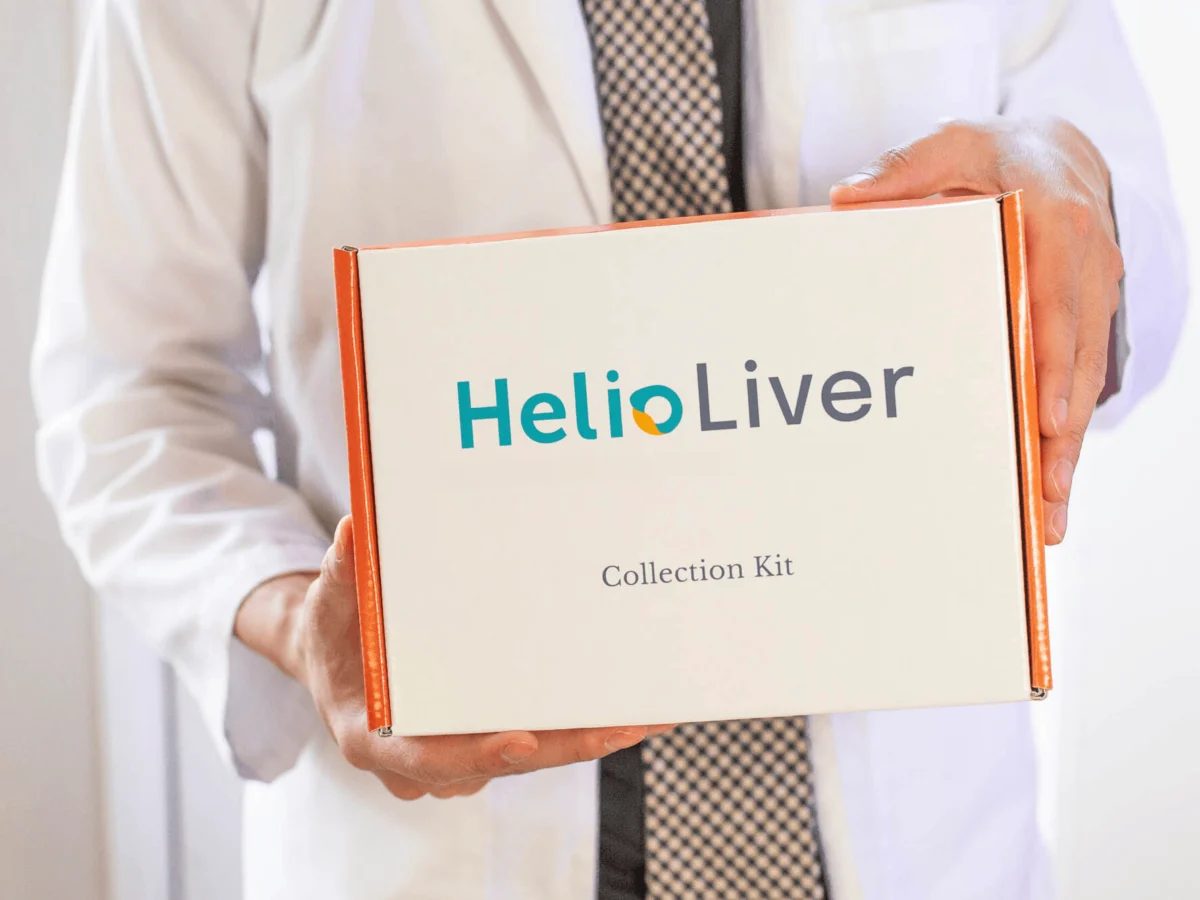
A simple blood draw during a routine visit. The Collection Kit includes everything needed, with a prepaid return label.
Receive Results
Results are available in 10–14 days. You receive a clear Normal or Abnormal report indicating the likelihood of HCC, with confirmatory imaging (MRI or CT) recommended for abnormal results. A normal result does not exclude HCC and does not replace ongoing surveillance.
Which of Your Patients May Benefit
HelioLiver LDT is intended for patients at high risk of HCC who are recommended for routine surveillance, including:
Cirrhosis
Cirrhosis of any etiology
Hepatitis B & C
Chronic hepatitis B or hepatitis C
MASLD / NAFLD & alcohol-related
Alcohol-related or metabolic liver disease
Advanced fibrosis & other
Advanced fibrosis, hereditary hemochromatosis, primary biliary cholangitis, Wilson's disease
AASLD recommendation: AASLD recommends HCC surveillance approximately every six months for patients at high risk, such as those with cirrhosis.
Get the Latest Clinical Research for Your Practice
Stay up to date on HelioLiver, HCC surveillance research, and resources for your practice.
Bring Earlier Liver Cancer Detection to Your Practice
Join the providers using HelioLiver to detect HCC earlier — from a simple blood draw.
The HelioLiver test is a laboratory developed test intended to aid in the detection of hepatocellular carcinoma in adults at high risk. It is not a replacement for guideline-recommended surveillance imaging and it is not a diagnostic test. A positive result requires diagnostic follow-up. A negative result does not exclude the presence of hepatocellular carcinoma.