
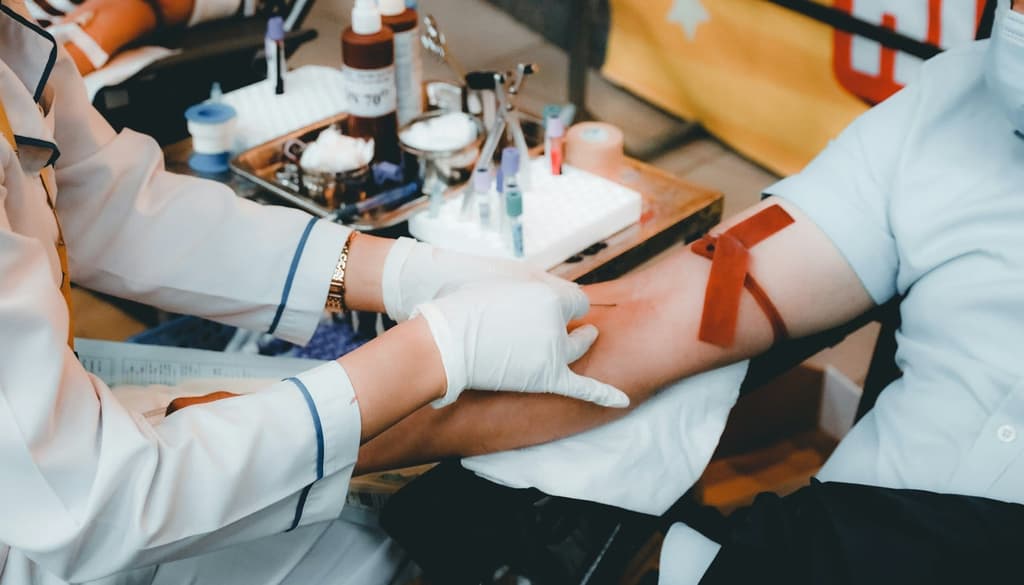
In OncData’s Exploring AI in Oncology, Helio Genomics CEO Bharat Tewarie discusses HelioLiver’s role in the early detection of hepatocellular carcinoma — its place alongside ultrasound and MRI, and the barriers to broader adoption.
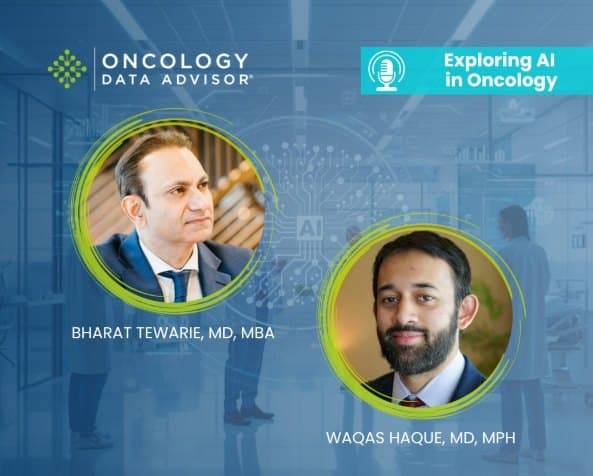
By Keira Smith, OncData. In the latest episode of Exploring AI in Oncology, Waqas Haque, MD, MPH, speaks with Bharat Tewarie, MD, MBA, CEO of Helio Genomics, about the company’s AI-powered blood test, HelioLiver, and its role in detecting hepatocellular carcinoma (HCC).
Unmet Needs in Liver Cancer Detection
Dr. Tewarie emphasized that liver cancer is often diagnosed too late for curative treatment. “Liver cancer is emerging as a silent epidemic in the US, often going undetected because it’s diagnosed at an advanced stage due to having no early symptoms,” he said, noting more than 42,000 new cases and nearly 30,000 deaths projected this year in the U.S., with an overall five-year survival rate of just 22%. He argued that the current standard of care — ultrasound every six months — “simply isn’t cutting it,” suffering from poor adherence (up to 90% of eligible adults forgo it) and suboptimal sensitivity.
HelioLiver’s Place in Clinical Practice
“Clinicians today should view HelioLiver as a very powerful tool that can serve in multiple roles depending on the clinical context,” he said. While it doesn’t replace diagnostic contrast-enhanced MRI or CT, “it does serve as a critical clinical trigger for these gold-standard modalities.” He noted that “ultrasound today misses every single sub-2 cm lesion in the real-world cirrhotic population,” whereas HelioLiver, as shown in the CLiMB study, catches a meaningful portion. The test can also act as a “safety net” for patients with inconsistent surveillance or limited imaging access.
The Technology Behind the Test
HelioLiver identifies cell-free methylated DNA, a biomarker for cancer. Dr. Tewarie framed the single-cancer focus as a strength: because the test is built specifically to detect liver cancer in cirrhotic patients, it is trained to interpret tumor signals in the setting of inflammation and fibrosis — delivering “better sensitivity for the smallest curable liver tumors in high-risk patients.”
What to Do After a Positive Test
“If HelioLiver shows positivity, you go to the next step in the guideline, which is MRI,” he said — keeping clinicians within the existing workflow. He highlighted the company’s partnership with Quest Diagnostics, which lets providers access HelioLiver through their existing Quest account and EHR, shifting the test “from a manual kit-based process to seamless laboratory workflow.”
Clinician Education
Dr. Tewarie identified clinician education as the greatest near-term challenge, particularly among hepatologists, gastroenterologists, and primary care clinicians managing patients with cirrhosis, MASLD, MASH, or hepatitis B. “Blood tests like HelioLiver actually represent a paradigm shift — objective, convenient, and superior for smaller tumors, especially those less than 2 cm.”
Key Takeaways
- Liver cancer remains a major unmet need because many patients are diagnosed at advanced stages, when curative options are limited.
- HelioLiver is a blood-based test that detects cell-free methylated DNA, designed specifically for early HCC detection in high-risk patients.
- It can serve as an adjunct or safety net to ultrasound depending on clinical context — not a substitute for diagnostic MRI or CT.
- A positive HelioLiver result should prompt the next guideline step, namely diagnostic MRI.
- The test may be especially useful in patients with cirrhosis and hepatitis B infection, and those nonadherent with ultrasound surveillance.
- The largest barrier to adoption is not technology, but clinician education.
Watch the interview on YouTube →
By Keira Smith. Source: OncData — “Exploring AI in Oncology.”