Health Tech: Shu Li on How Helio Health’s Technology Can Make an Important Impact on Our Overall Wellness. Interview by Yitzi Weiner for Authority Magazine.
In recent years, Big Tech has gotten a bad rep. But of course many tech companies are doing important work making monumental positive changes to society, health, and the environment. To highlight these, we started a new interview series about “Technology Making An Important Positive Social Impact”. We are interviewing leaders of tech companies who are creating or have created a tech product that is helping to make a positive change in people’s lives or the environment. As a part of this series, I had the pleasure of interviewing Shu Li.
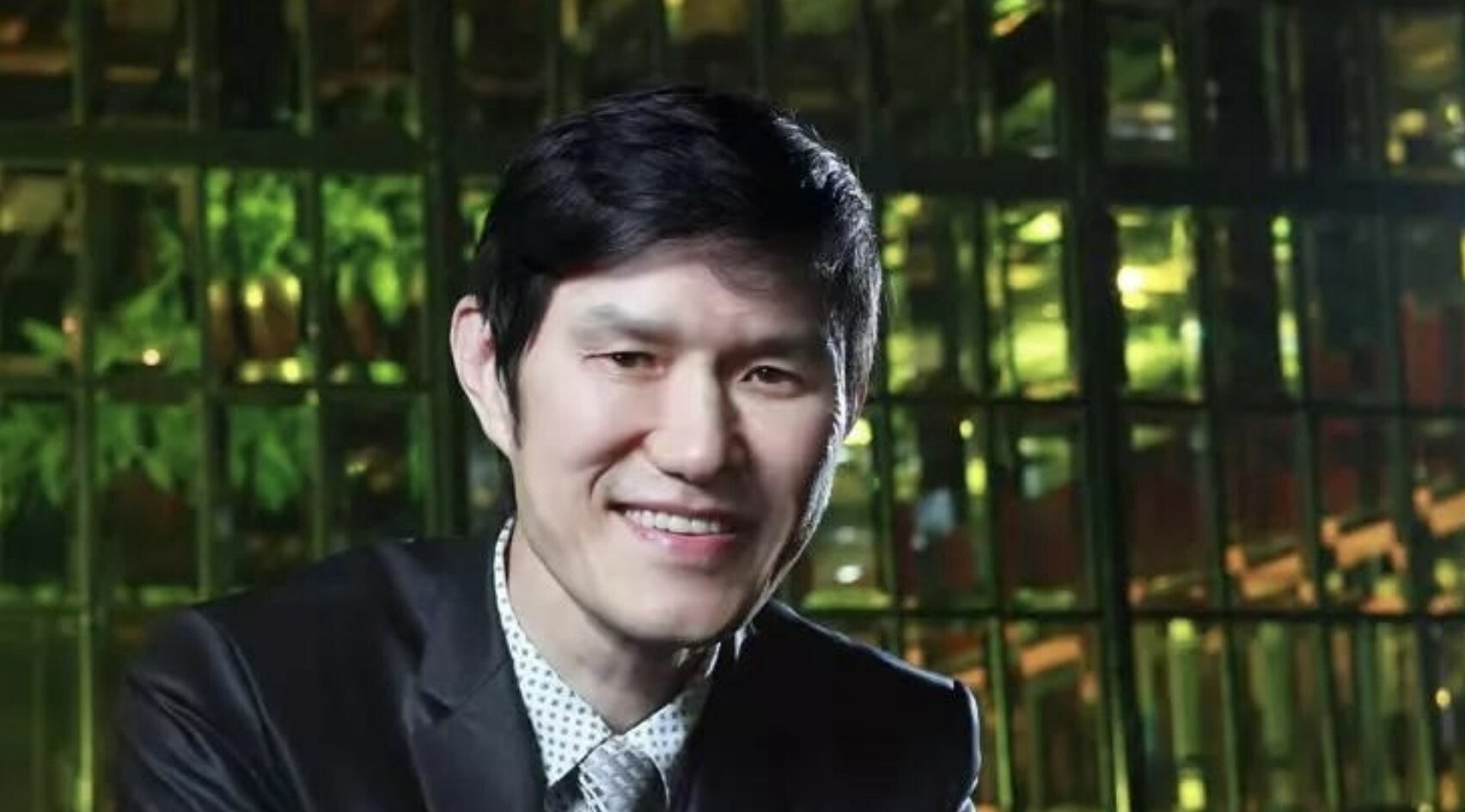
Shu Li, Ph.D., is the founder and Chairman of Helio Health, an AI-driven healthcare company focused on developing and commercializing early cancer detection tests from a simple blood draw. Dr. Li is also the founder and Chairman of Laboratory for Advanced Medicine & Health, WA Health Centers (merged with NASDAQ: KANG), Cellular BioMedicine Group (NASDAQ: CBMG), CAS Health Holdings and Yuge.com. Previously, Dr. Li was the founder, President, and CEO of Jazz Semiconductor (currently TowerJazz), founder and board member of the China-Japan-US JV Huahong NEC (SEHK: 1347.HK), Senior Vice President of Conexant Systems (NASDAQ: CNXT), Vice President and General Manager, at Honeywell (NYSE: HON), and held senior management positions at Motorola and Intel. Dr. Li received his Ph.D. in Applied Sciences from Harvard University, MSEE from the University of Illinois Urbana-Champaign, and BS in Automatic Control from Huazhong University of Science and Technology.
Thank you so much for joining us in this interview series. Before we dive in, our readers would love to learn a bit more about you. Can you tell us a bit about your childhood backstory and how you grew up?
I was born in Beijing to parents who were both professors at the China University of Geosciences. They had been working in the exploration and discovery of coal and oil fields, and as such I spent most of my childhood living with my grandmother. My grandfather was a renowned industrial and business entrepreneur, and a leader of Gaoyang textile industry in the Republic of China. Even after the public-private partnership reform by the communist government in early 50’s, my family continued to live a worry-free lifestyle even though the family-owned business was taken.
But my easy and happy childhood ended abruptly when my family was hit hard during the cultural revolution in China. My father was exiled to a labor camp in the Hubei Province, while my mother, sister, and I were exiled to a labor camp in the Jiangxi Province. I was only nine years old, and I had to skip elementary school completely. My mother worked in the rice fields during the day while I took care of my little sister, and all the chores at home.
We constantly ate rice and boiled pumpkin but if we wanted something else to eat, we had to figure it out ourselves. I often went up to the mountains to catch snakes, down into the river to catch fish, and picked wild fruits and plucked bamboo shoots. Later on, I learned how to raise chickens, grow vegetables, and I even built a thatched shed by myself.
This experience is something I’ll never forget. It offered me self-confidence; no matter how harsh a place I was in, I could survive. Due to such experience, I have turned into a person with strong survivability and resilience.
By age 15, colleges and universities across the country began to accept students from workers and peasants on a large scale and as a result, my parents were allowed back to Beijing to teach. My whole family was reunited and I was able to attend high school. After working hard to catch up on lessons and classes I missed, I took the first National College Entrance Examination after the Cultural Revolution in 1977, but was not admitted. The following year I was accepted to the Department of Automatic Control of Huazhong Institute of Technology (now Huazhong University of Science and Technology) and completely immersed myself in my studies. After making the number one place in the national graduate entrance exam for the National Academy of Sciences, I was selected to study abroad in America.
In 1984, I attended the University of Illinois Urbana-Champaign to study for a Ph.D. degree in electrical engineering and computer sciences. Two year later, I changed directions and transferred to Harvard University to study for a doctorate in Applied Science. While it usually takes four to six years to complete a doctoral dissertation, I earned my doctorate in only two years.
Can you share the most interesting story that happened to you since you began your career?
By 29 years old, I was teaching at the University of Arizona, and during the summer break, I became interested in Fab6, Intel’s primary semiconductor production site. At the time, Fab6 was one of the most advanced factories in the world; a major percentage of the world’s advanced microprocessor/controller chips were produced there. I was curious about this advanced manufacturing, so I called the Vice President of the factory directly. Unfortunately, my English was not very good and I didn’t know much about American culture. On top of that, I didn’t have any relevant management experience and had no previous exposure to chips or semiconductors. As a result, the VP was quite direct and impolite when rejecting me, but I didn’t give up.
One thing about me is that I’m resilient.
About a week later, I called again and told him, “although I have no experience, I have a smart mind. If you have any problem that can’t be solved, just hand it over to me. You have nothing to lose, nor is there any risk.” My persistence paid off and the VP agreed to take a chance on me.
Back then the plant was operating 24 hours a day, seven days a week at full capacity, but it was still unable to meet the market demands. The VP was trying to figure out how to double the production capacity with the existing equipment. While I was at the plant, I meticulously observed and studied day and night, watching all the processes from chip ordering to chip delivery, analyzing the operation of the machinery, the staffing and the overall layout.
After three weeks as a simple bystander, I proposed several adjustments to the VP that would streamline the production and eliminate the bottlenecks that I observed. The report I delivered was pretty basic, relying mostly on my common sense but needless to say the VP was impressed. He invited me back to manage the operations of this fully automated plant with more than 500 American employees and 24/7 operations without having any previous management experience.
None of us are able to achieve success without some help along the way. Is there a particular person who you are grateful towards who helped get you to where you are? Can you share a story about that?
I had a few conversations that have stuck with me from my two years at Harvard. I once quarreled with my mentor, Professor YC Ho, a fellow of the American Academy of Engineering and a world-renowned scholar in control theory and search optimization. He said to me, “there are many smart people like you in the world, but only a few are truly successful. Don’t think that you can succeed by being just smart.” I have always kept his words in my heart, and I have never dared to count on my talent and slack off. Everything I do must be down-to-earth. He also said to me, “if you’re smart enough, if there’s anything you don’t know how to do or a tough decision at hand, just lock yourself in a room for hours or days, you’ll figure it out.”
Another moment that stands out happened during graduation. We asked our dean how to explain our degree — a Ph.D. of Applied Science — to others. He told us, “a Ph.D. of Applied Science means that if you graduate from here, you can do anything.”
Can you please give us your favorite “Life Lesson Quote”? Can you share how that was relevant to you in your life?
Lao Tzu said, “the way of The Heaven is to lose what you have in surplus and make up for what you don’t have in deficiency; so, the void wins over the real and the deficiency defeats the surplus.” To me, this means that life is like ocean waves with highs and lows. Lao Tzu’s words emphasize a balance and always remind me of two things: don’t get carried away when you succeed, and failures can be turned into victories.
You are a successful business leader. Which three character traits do you think were most instrumental to your success? Can you please share a story or example for each?
Passion: First of all, you must have a passion and be particularly interested in a certain aspect in order to pursue a new project. When you are fully invested and passionate in a topic, you’re likely to make friends also in this field or with similar interests, and you will be given more opportunities. It may seem accidental; but without passion, you may not see the opportunity even when it’s presented.
Prudence: Be very careful when starting any project, because the chance of failure is too great for a new project, so be careful to assess your strengths and weaknesses. It usually takes me two or three years to make up my mind whether to start a project or not, rather than working on the project at first sight.
Persistence: Every entrepreneur needs persistence. It is crucial to have mental toughness because it is inevitable to encounter setbacks and pressure. Whether your mindset sees entrepreneurship as a process and fun, or as a painful exercise and torment, the outcome will be different. Working hard no matter what will pay off in the end.
Let’s now shift to the main part of our discussion about the tech tools that you are helping to create that can make a positive impact on our wellness. To begin, which particular problems are you aiming to solve?
My personal goal is to use new technologies and new methods to detect potential health problems and diagnose diseases at an early stage where curative treatment options may be more widely available. In 2015, I invested in and founded Helio Health [now Helio Genomics] and today I serve as the Chairman of the Board.
Helio Health is an AI-driven healthcare company focused on developing and commercializing early cancer detection tests from a simple blood draw. Helio recently launched a breakthrough product, HelioLiver, for the early detection of hepatocellular carcinoma (HCC), the most common form of liver cancer and the fastest growing and second deadliest cancer worldwide.
HelioLiver serves as an innovative and convenient solution to the pitfalls of current HCC surveillance, with the potential to advance the standard of care for detecting early-stage liver cancer. Unlike current methods, HelioLiver is a multi-analyte blood test that incorporates cell free DNA (cfDNA) methylation patterns and serum protein markers that provides a clear indicator of whether HCC may be present and is convenient for both providers and patients.
The process requires only a simple blood draw, which can be conducted during a routine check-up and provides a quick and more accurate way to receive regular surveillance for people at high risk of developing cancer. These personalized and cost-effective approaches support Helio’s patient-first commitment to enable widespread adoption of early disease detection and proactive disease management, remove barriers to testing, and ultimately improve patient outcomes while reducing the cost burden across the healthcare system.
How do you think your technology can address this?
Helio’s breakthrough technology platform, called ECLIPSE™, can identify unique DNA signatures to verifiably detect cancer earlier and with greater accuracy using next-generation sequencing technology. This combination of proprietary identification of signature biomarkers complemented with DNA methylation has the potential to change the entire paradigm of cancer diagnostics by enabling earlier detection when curative options are still available.
While liver cancer is the company’s first indication for its liquid biopsy portfolio, Helio is poised to build a platform technology that can revolutionize the future of early cancer detection. The AI-enabled research and development process advances the company’s pipeline of cancer testing products, with potential for colon, breast, lung, and multi-cancer indications.
Can you tell us the backstory about what inspired you to originally feel passionate about this cause?
Growing up, the family on my father’s side had a history of significant metabolic diseases over time including cardiovascular disease, diabetes, high blood pressure, and obesity. Although the family members were exceptionally skinny when they were young, they began to gain weight after the age of 30, and almost all of them had heart disease and diabetes. Sadly, my grandfather died of a heart attack, and my father also underwent heart surgery. After I turned 30 years old, my father warned me that in two or three years, I will have a similar fate to my family members and could have a higher propensity for metabolic diseases.
Determined to rewrite my future, I set up rules for myself: first, I’m going to maintain my weight at college all my life; second, I’m going to study how to be healthier and how to fight to age. From this point on, I embarked on a personal health journey, and at the same time, I made it my mission to positively impact other people’s lives in the same way.
How do you think this might change the world?
I believe we’ll change the world by making cancer a non-life-threatening chronic disease, saving millions of lives, and reducing the huge cancer treatment cost burden (over a trillion per year) to society through breakthrough technology of blood-based early cancer detection. We’ll completely change the paradigm of cancer screening and surveillance, replacing and enhancing the current standard care of imaging and endoscoping which is insensitive to early cancers, subjecting to radiation, inconvenient for patients, and high cost.
Keeping “Black Mirror” and the “Law of Unintended Consequences” in mind, can you see any potential drawbacks about this technology that people should think more deeply about?
Not at all. The consequence is that more and more people are able to effortlessly and cost efficiently conduct early cancer detection. Currently, due to inconvenience (such as going through a colonoscopy procedure), concerns about radiation (CT scan, mammography), low sensitivity (ultrasound), and high cost, many people lack urgency, motivation or the ability to have regular cancer surveillance. The majority of Americans take a “don’t fix it unless it’s broken” approach to their health. Instead of following preventative medical guidelines and doctors’ recommendations, patients can fall out of touch with their care team and out of tune with their health. When serious symptoms surface, patients finally seek medical advice, usually leading to a physician confirming late-stage disease. By using convenient, simple and accurate testing modalities, our hope is to catch cancer earlier when it is more treatable.
Here is the main question for our discussion. Based on your experience and success, can you please share “Five things you need to know to successfully create technology that can make a positive social impact”?
Based on my experiences, I believe there are five critical questions you should ask yourself first before embarking on a new entrepreneurial endeavor:
Do you have a passion/vision to solve a societal issue?
Without passion, it is hard to be mentally prepared for the up and downs of the road to entrepreneurship. Passion gives you hope and drive. Success depends on hard work and fate (or opportunity). It is said time, place, and people, all three have to be aligned in order to succeed. However, it is when you have the passion and vision, you start to attract the people, the opportunity around you. Opportunity always goes to the prepared. Our vision of making cancer a treatable non-life-threatening disease is exciting for society, which gives us strength no matter how difficult the path is.
Do you have a differentiating technology or a way to create a breakthrough?
You must have a persistent mid- to long-term competitive edge, such as differentiating technology, an unparalleled ability to access to sales channels and markets, and a unique business model. When I founded Helio, we found an opportunity to build upon over 10 years of breakthrough research and intellectual properties by UCSD on cfDNA methylation in early cancer detection. This gives us a huge competitive edge.
Do you have the ability to pull it through?
To make a business successful, you need funding, experience, people expertise, timing of the market and technology adoption, as well as market acceptance. Do you have ability to pull together all these elements to ensure the success? Funding, for example, is always a big issue for an early stage business. You may choose to go lean, using your own limited capital or fundraising from friends and families. This way, you have more decision power and less equity dilution, but is typically the more difficult option. Another way is to get name brand VCs on board as early as possible. With sufficient funds and financial expertise in place, things may be smoother; however, you may have your vision and financial interest not totally aligned, and you’ll be diluted early on. Neither choice is right or wrong, but it will determine your future business experiences.
Are you prepared to be perseverant?
Although I am successful in my business startups, like many entrepreneurs, I have experienced being on the verge of failure several times. Sometimes the technology encountered a particularly big challenge, and we didn’t know it could be solved; sometimes, the funds were cut off, and employees’ wages weren’t paid. The road ahead is never as you planned, although the vision is the same. Many times, it takes perseverance to endure the stress, difficulties, and risk before you see the light at the end of the tunnel. Over the years, I have learned a lot from the doctrines of Taoism and Lao Tzu. It has impacted every aspect of my life, from how I work to how I live. One of the biggest takeaways for me is that there is balance in all things. Because of this, I believe that the most successful entrepreneurs, no matter how brilliant they seem today, have experienced the test of failure, but they have only been reborn from the ashes.
Of all the things you’d like to do in life in the next 5 years, is this the most wanted?
I view life as a process in which a sense of mission and responsibility is needed. Once you choose embarking on an entrepreneur project, you have to stick to it for success. This means you may lose opportunities for other ventures. Startup is difficult, so you cannot be halfhearted. Therefore, you must be thinking hard in order to commit to it. I genuinely enjoy the process of starting a business. I’ve worked as a senior executive in large corporations for many years and have a deep understanding of the “office politics.” Although it’s challenging to start a business, I relish being my own boss and having the ability to decide what I want to do. As long as what I do is meaningful and valuable to the society, even if I have to experience disappointments from time to time, I still like the feeling of innovation and challenge. A stable job cannot replace that kind of experience.
If you could tell other young people one thing about why they should consider making a positive impact on our environment or society, like you, what would you tell them?
Most people are driven by the desire to make money for themselves. While it isn’t much wrong with this in theory, the people who actually build wealth think differently about finances. The trick is to think, how can I make money for other people. If you work for a big company, you make money for the employer. If you sell things, you “make money” for the people who buy your stuff. The way I see it, if you’re an entrepreneur, you can make money by solving a societal issue and if you can make money for other people, ultimately you make more money for yourself.
View source version on medium.com.