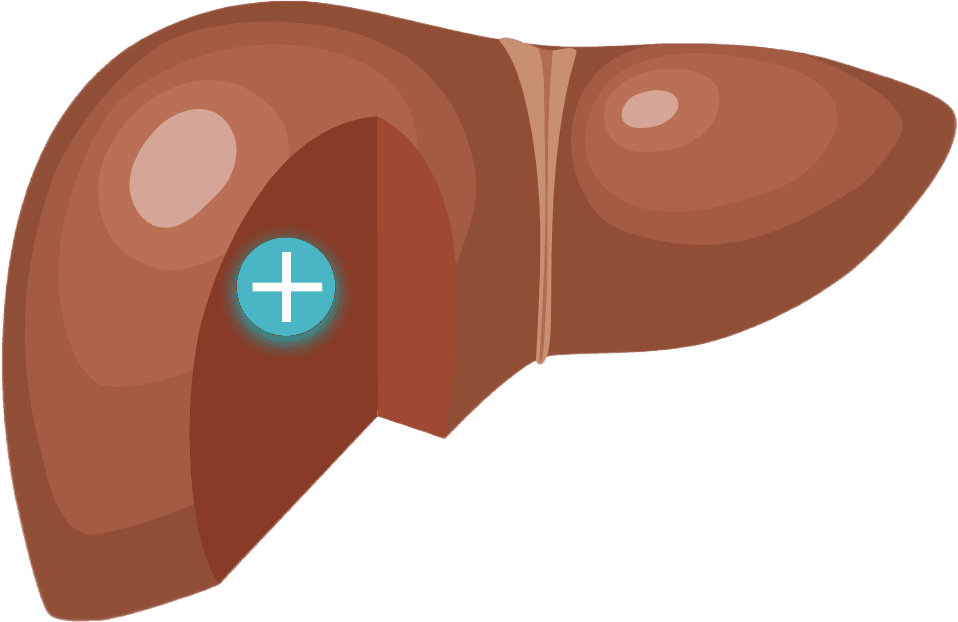
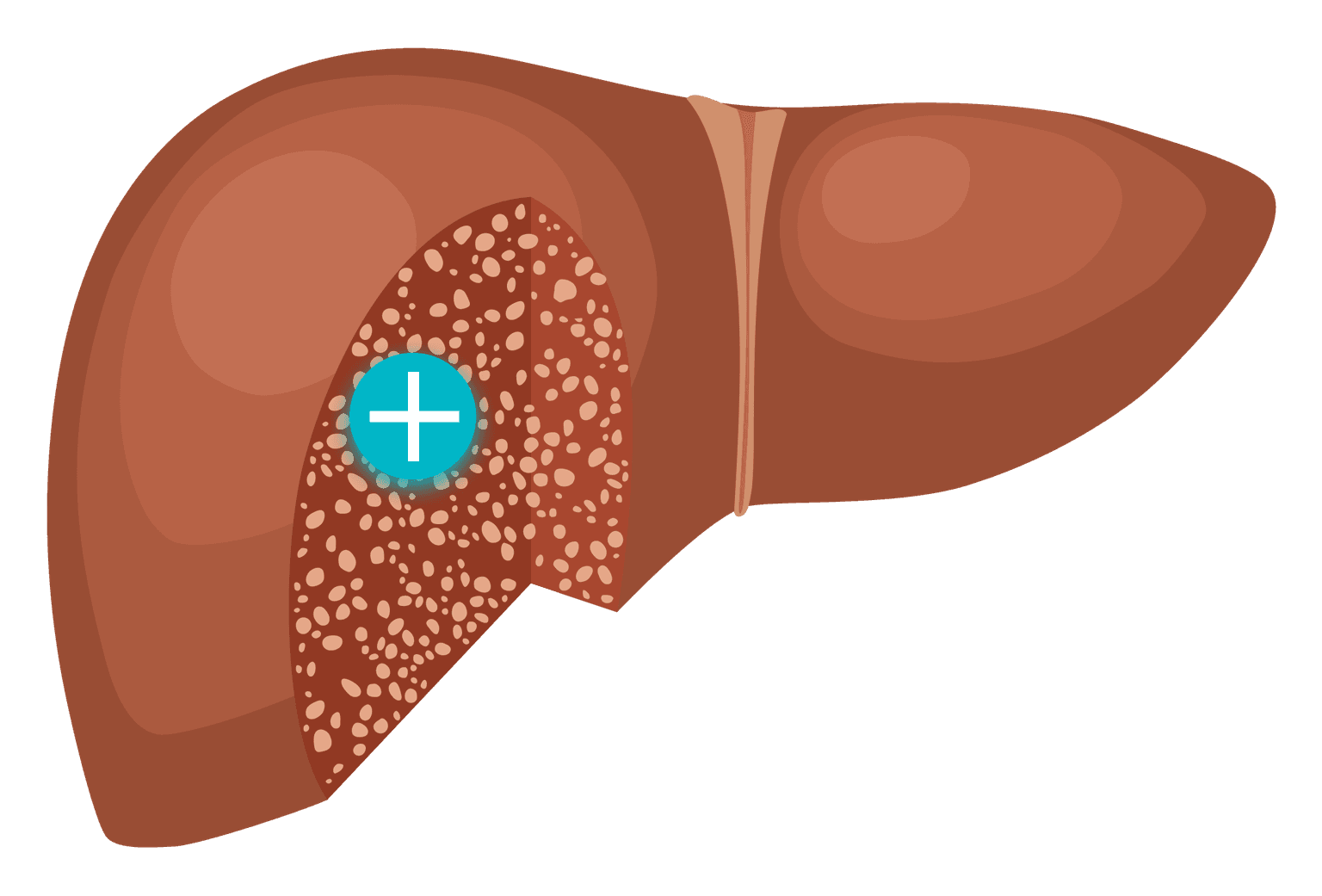
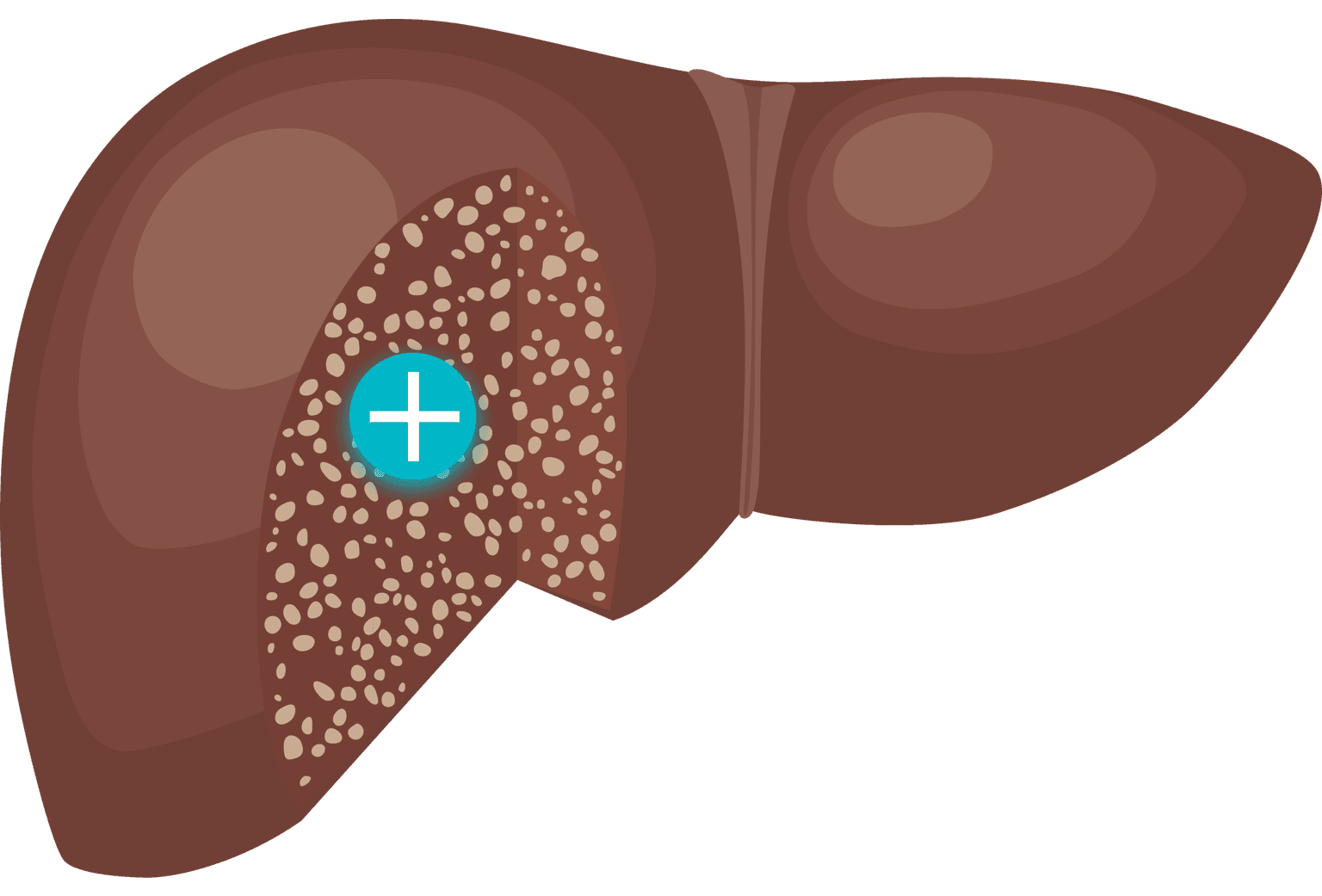
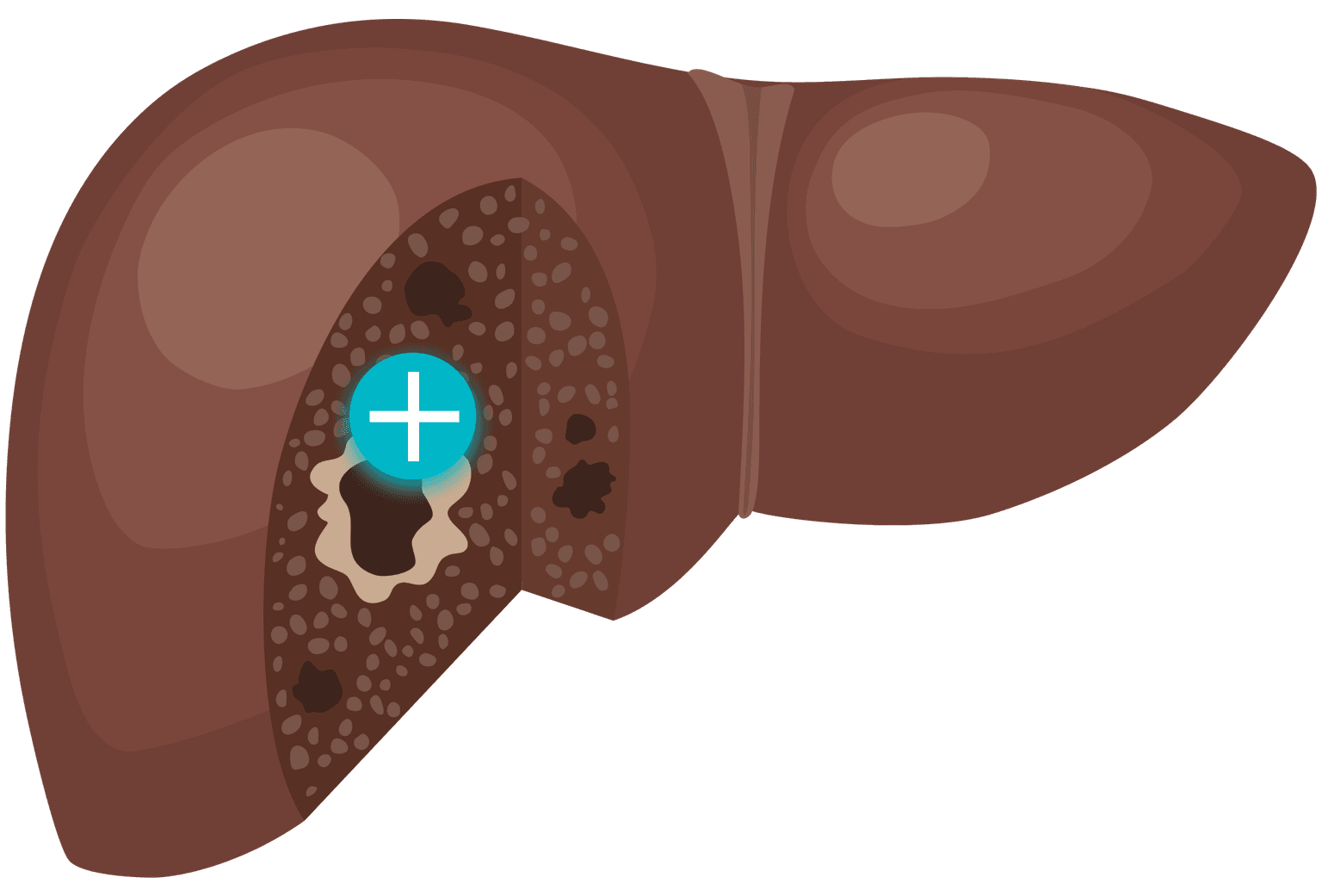
Cirrhosis is present when more scarring in the liver builds up, making it harder for the liver to function. It can take years for scarring to reach the point of cirrhosis, which can help patients with known risk factors prevent or delay its onset.
Cirrhosis is usually when liver disease is diagnosed as it is the first stage with noticeable symptoms including abdominal pain, loss of appetite, yellowing of the skin (jaundice), and fluid retention.
Individuals with cirrhosis are at the highest risk for liver cancer, so regular monitoring every 6 months is highly recommended. Managing symptoms can help delay or prevent the onset of liver cancer. In cases where cancer can’t be prevented, early diagnosis significantly improves treatment options.
Early Symptoms
- Loss of appetite
- Unexplained fatigue
- Nausea & vomiting
- Unexplained weight loss
Advanced Symptoms
- Easy bruising and bleeding
- Blood in stool
- Diminished sex drive
- Premature menopause
- Easy bruising and bleeding
- Brown or orange color in urine
- Swelling in the legs, feet, and ankles
- Small widened blood vessels visible on the skin (telangiectasia)
- Yellowing of the skin and/or eyes (jaundice)